Bevel and pillow markers
Bevel and Pillow Markers: Prices and Buying Guide
Compare bevel and pillow grave markers, understand the full installed price, and review cemetery rules, finishes, lettering, and quotes.
Published by HeadstoneQuotes · Sources last verified October 5, 2026 · 11 min read
Last verified: October 5, 2026
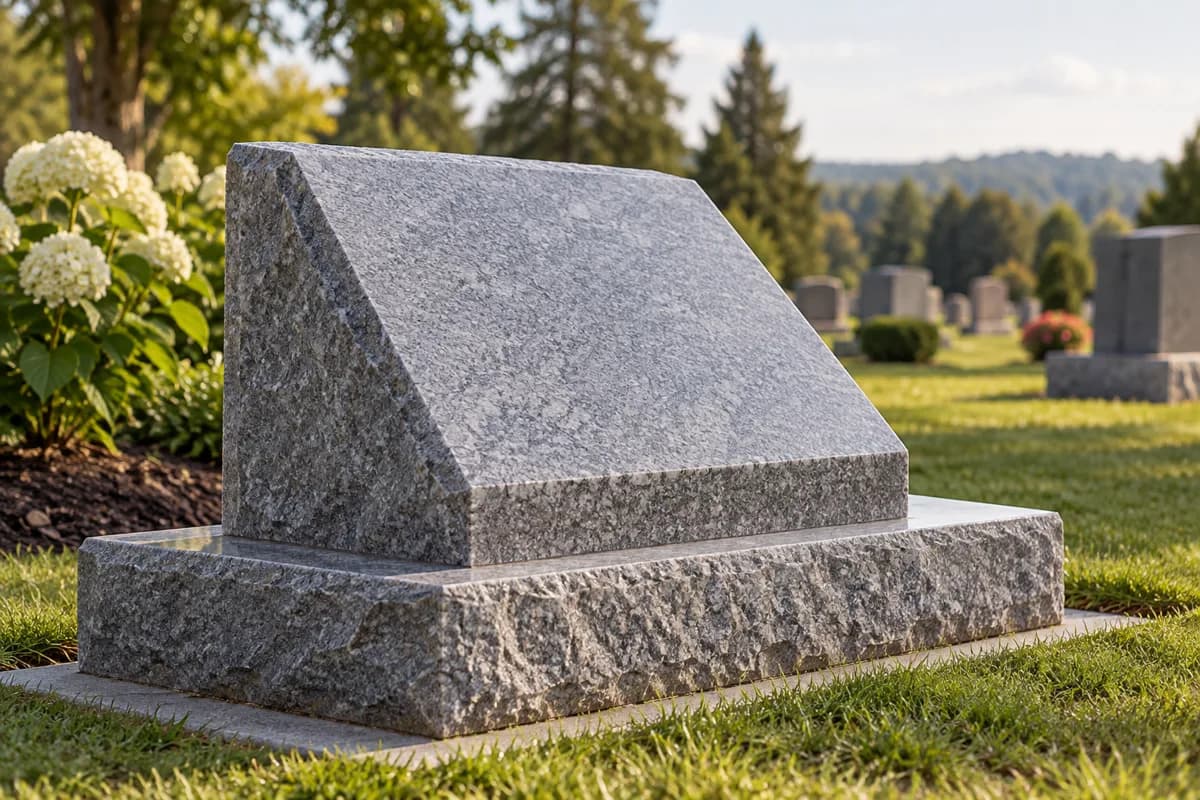
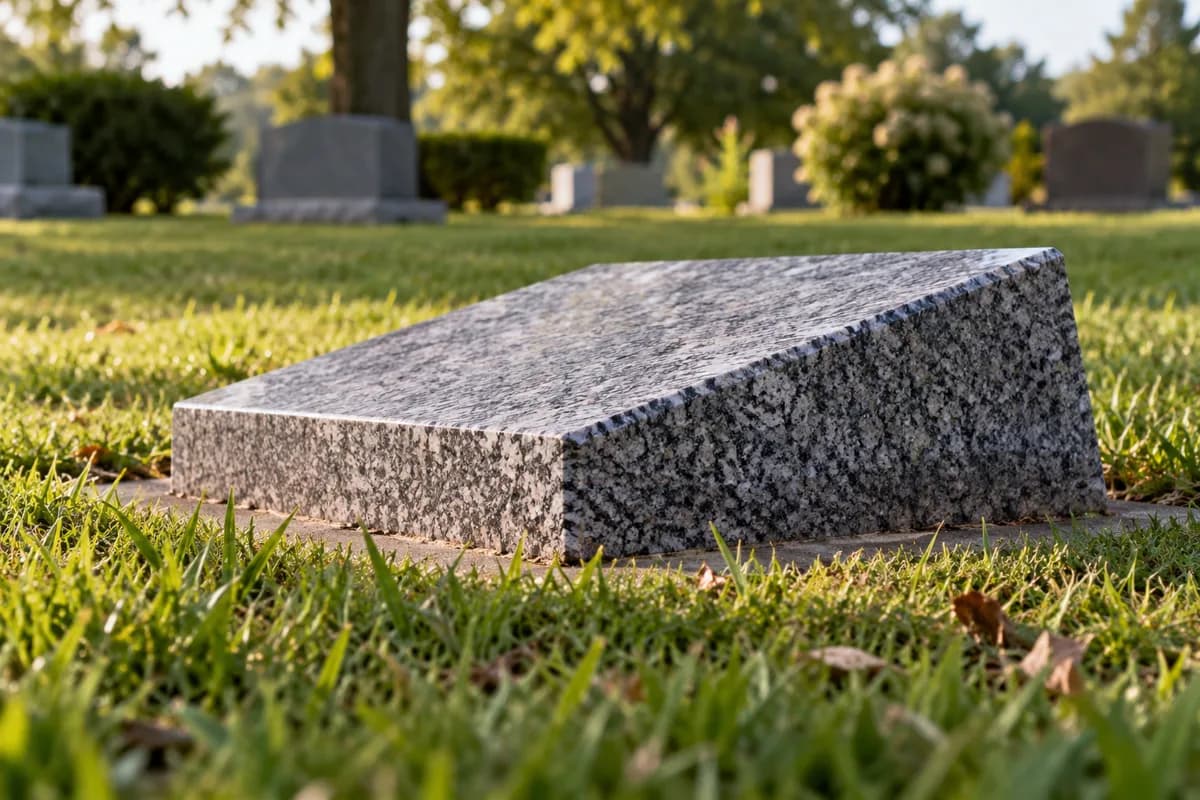
Bevel and pillow markers are low stone memorials with a face that rises toward the back. They sit between a marker level with the grass and a taller slant monument in appearance. A bevel typically has a defined wedge profile; “pillow” often describes a lower, softer-looking raised form. Makers do not use these labels identically. The safest way to buy either is to agree on a side-view drawing, measured height, base or foundation arrangement, and cemetery approval before paying for fabrication.
What do bevel and pillow markers cost?
Empathy's 2026 cost guide lists $500–$1,500 for a bevel marker. It does not publish a separate pillow range. The figure is an external national estimate, not Headstone Quotes sales data or a local installed quote. Empathy's style table does not itemize a base, foundation, shipping, and cemetery setting within that range. A wider companion marker or more elaborate finish can cost more. Do not present the bevel estimate as a measured pillow price.
The Funeral Consumers Alliance offers an undated example of perhaps $1,000 for a marker including engraving and setting, without specifying its style. That is general context, not a bevel or pillow quote. Request a current itemized proposal for the exact marker your cemetery permits.
| Cost line | What to clarify |
|---|---|
| Stone | Width, depth, front and back height, granite color, and profile. |
| Finish | Polished top, sides, back, border, or textured edges. |
| Inscription | Names, dates, motif, emblem, photo, and future additions. |
| Support | Visible base, below-ground foundation, or cemetery-specified setting. |
| Delivery | Freight destination, unloading, and damage responsibility. |
| Installation | Installer, equipment, leveling, and site restoration. |
| Cemetery charges | Approval, inspection, foundation, and setting fees. |
Ask for the installed total and the party responsible for each line. A catalog listing that says “bevel marker” can describe the stone alone, while the cemetery will bill separately for its foundation and setting.
What is the difference between bevel and pillow?
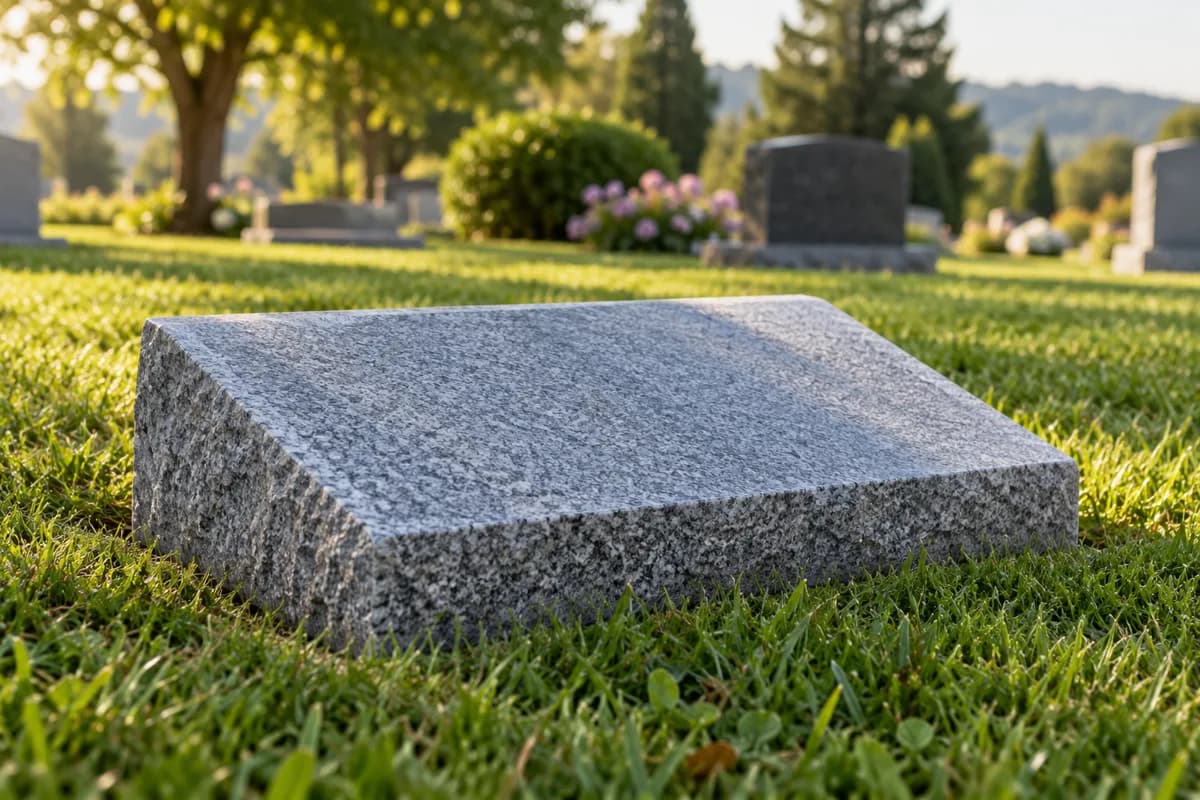
A bevel is generally a low rectangular stone whose face slopes upward from front to back. A pillow marker often has a gentler rise and a softer edge profile. Because suppliers may call the same shape by different names, the front height, back height, face angle, and edge treatment matter more than the label. Ask for front, side, and top views. A product photograph taken from above can make a marker appear flatter than it is.
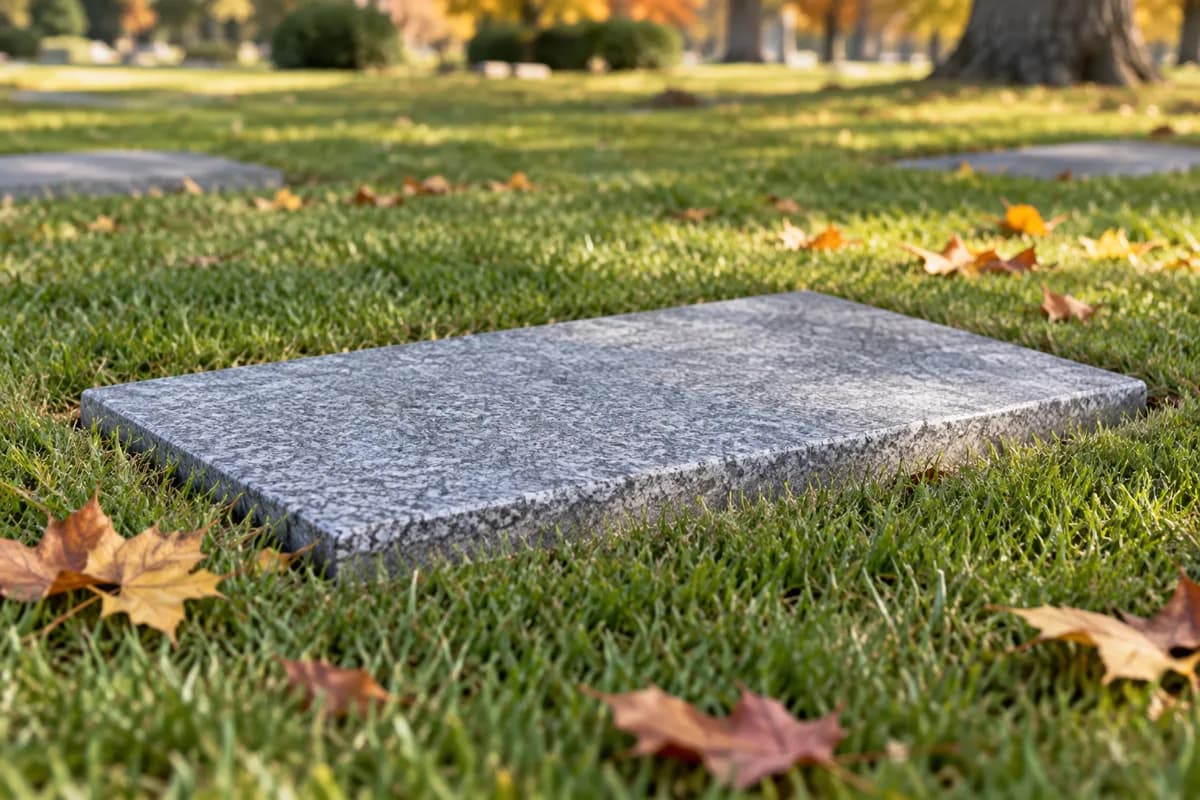
A slant is typically taller, with a steeper, more upright reading face. A flat marker lies level with the turf or near it, subject to cemetery terminology. See flat grave markers, slant headstones, and our headstone types guide to place these forms side by side. If your cemetery specifies “bevel only,” ask whether it means a particular maximum back height rather than assuming every catalog bevel will qualify.
Cemetery rules control the profile
The FTC notes that cemeteries vary in allowed memorial types. The Funeral Consumers Alliance recommends obtaining written rules and checking allowed size. Low markers are not interchangeable for approval: a flat-only lawn section may reject even a modest bevel, while another section may expressly permit it.
Ask the cemetery for rules tied to the plot and section. Confirm whether bevels and pillows are named as permitted styles; maximum width, depth, and installed back height; required material and color; whether a separate base is permitted; the foundation method; and whether accessories may project beyond the footprint. Ask who approves and installs the marker and what fees apply. Get written approval of the final drawing, not verbal approval of a broad category. The cemetery requirements guide provides a fuller checklist.
Record width and depth for the whole stone. Front and back height should be measured from the intended finished grade, with any visible base shown separately. Ask whether the cemetery measures the stone from the ground after setting or measures its manufactured thickness. That distinction matters for a low-height limit. A dealer's “standard size” is useful only after the cemetery verifies it for this grave.
Single and companion layouts
A single marker usually gives one person a name, dates, and a short personal line. A companion marker is wider or arranged for two inscription blocks. Confirm that a companion footprint is allowed on the relevant grave space or spaces. The physical stone may be wide enough while the cemetery's plot rules still prevent installation where you expect it.
If a second name or date will be added later, design its place now. Ask how the future lettering will be cut and whether the stone can remain installed during that work. Keep the lettering specification and final proof. A future inscription can cost extra and may require cemetery permission for the work visit. Budget for it rather than treating the blank area as a free addition.
The slope affects how visitors read the text. A bevel's face is shallow enough that a long inscription may be awkward to read from a standing position; a deeper or taller marker may improve the angle but fail the cemetery height rule. Ask for a scale proof with legible lettering dimensions. Decide whether a border, flower, or emblem earns its space after the name and dates fit clearly. Ask the maker to show actual samples of proposed lettering and image methods.
Granite, color, and finish
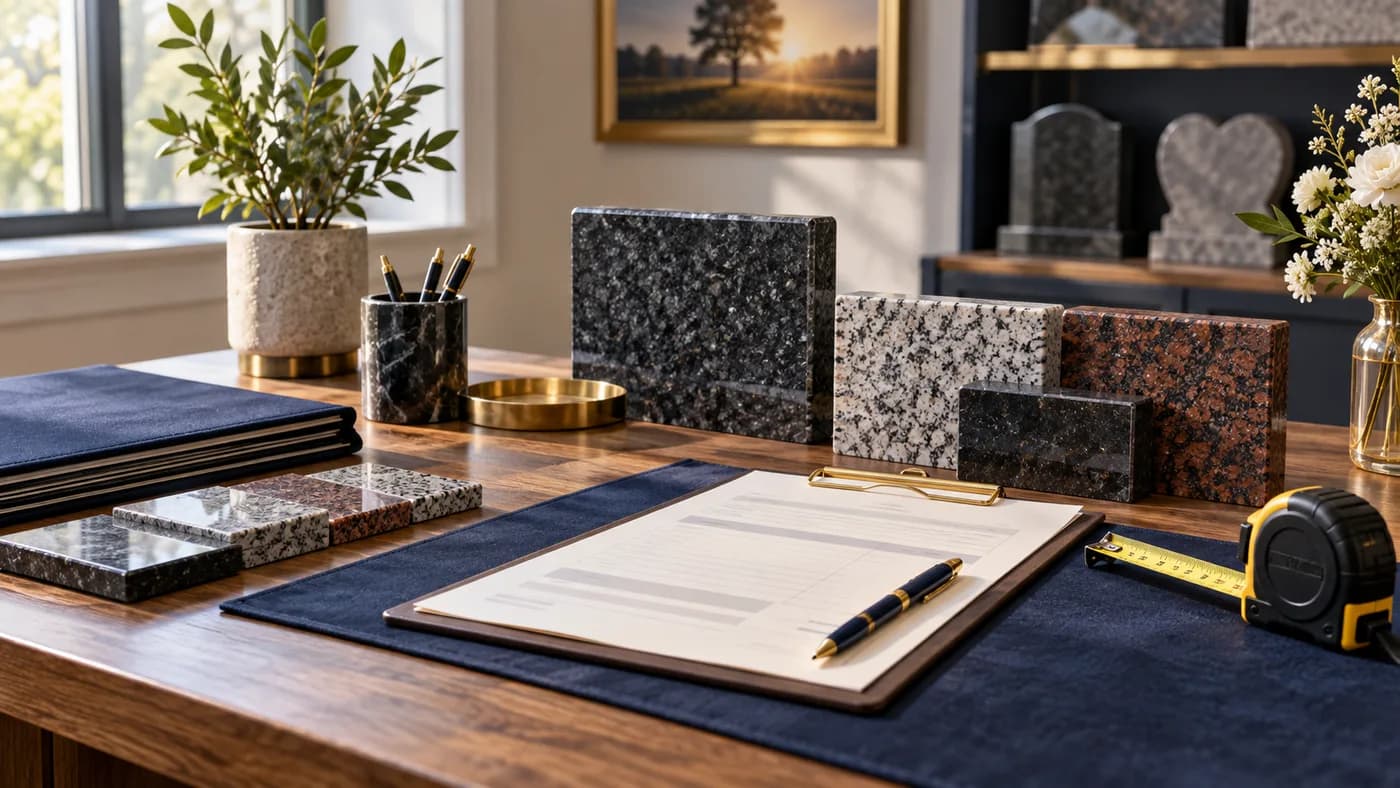
These low-profile markers are commonly sold in granite. Ask the seller to identify the stone color and show a sample; natural variation means a screen image may not represent the exact piece. Surface choices can include a polished inscription face, polished or textured sides, and carved or rounded edges. A pillow effect may come from shaping and finishing more than a simple rectangular cut. Each quote should specify the actual finish on every visible side.
If a family is matching a nearby marker, record that marker's color, profile, dimensions, and lettering. Matching by a generic color name may be unreliable. Ask whether the same stone source and finishing method are available, and accept that natural stone will vary. Our granite versus bronze guide provides material context.
Photographs and vases require special attention on a low marker. A mounted portrait, raised plaque, or vase may violate a height or mowing rule even when the stone itself passes. Place every attachment on the approval drawing with its dimensions. Compare examples of a porcelain insert and a laser portrait if a picture is being considered. If a dealer suggests a vase cutout, ask how it affects the inscription space and support.
Support, installation, and drainage
The marker may sit on a cemetery-built foundation, a monument-company foundation, or another approved support. It may also have a visible base, depending on the design and rules. Do not equate “low” with “no installation charge.” Ask who prepares the ground, sets and levels the marker, and pays for each step. A piece set out of level or too low can be harder to read and maintain.
Confirm how the cemetery wants the front edge positioned relative to turf and whether soil or mulch may cover it over time. The installer should follow the cemetery's grade and foundation specification. Ask who handles a settlement problem and what written remedy applies if the stone is set differently from the approved drawing. Keep photographs of the completed setting and the invoice.
For cleaning, request the maker's directions for the chosen finish. The National Park Service publishes conservation guidance for government-issued stones; it is useful background, but it does not replace manufacturer instructions for a private marker. Avoid assuming a household cleaner is appropriate for etched, painted, or filled lettering.
Compare quotes using the same drawing
Give each seller the cemetery's written rule and one desired side profile. If you do not yet know whether bevel or pillow is permitted, request separate drawings for each within the limit. Compare the proposals on equivalent dimensions and scope.
| Compare | Ask |
|---|---|
| Profile | Same front and back height, slope, edge shaping? |
| Footprint | Same width, depth, and visible base? |
| Material | Same granite color, thickness, and finish? |
| Wording | Same text, symbol, border, and future name provision? |
| Approval | Who submits the drawing and revises it if rejected? |
| Setting | Foundation, delivery, leveling, and cemetery fees included? |
| Remedy | What happens if lettering or dimensions differ from the approved proof? |
A pillow may cost more than a plain bevel if it requires extra shaping, but that is a quoting question, not a universal rule. Do not assume one seller's “pillow” includes the same shaping as another's. Compare the side views and finish descriptions, then the total installed prices. The headstone cost guide explains the broader bill.
Ordering steps
- Get the exact plot and section identifiers and the cemetery's current marker specifications.
- Confirm whether bevel and pillow forms are both allowed and obtain the height measurement method.
- Choose single or companion layout and prepare the exact inscription.
- Request dimensioned side, top, and front views with itemized installed quotes.
- Compare granite, finish, accessories, foundation, delivery, and setting responsibilities.
- Submit the selected drawing to the cemetery before fabrication.
- Proofread names, dates, and design details with a second reader; review payment and correction terms.
- Keep the approved proof and installation record for later family reference.
See how to order a headstone for the full process. After confirming the cemetery's limits, request quotes using one consistent design brief.
Frequently asked questions
Is a pillow marker the same as a bevel marker?
The terms overlap in sellers' catalogs, but a pillow usually suggests a softer, lower profile. Ask for actual front and back heights and a side view. Those details determine the appearance and cemetery fit.
Can a bevel go in a flat-marker-only section?
Do not assume so. A bevel rises above grade. Ask the cemetery whether the exact profile is permitted and obtain approval of its drawing.
Does the $500–$1,500 published range cover a pillow?
Empathy publishes that range for bevel markers, with no separate pillow estimate. It may provide context for a similar low stone, but only local quotes establish a pillow's price and installation charges.
Do these markers need a foundation?
The cemetery decides the approved support and installer. A low marker can still require a foundation or paid setting. Ask before ordering.
Can we add a second inscription later?
Often a companion layout can reserve space, subject to the cemetery and the stone's dimensions. Agree on placement, technique, permission, and future cost in advance.
About these estimates
Price context: Empathy's 2026 headstone cost guide and the undated Funeral Consumers Alliance cemetery guide. Cemetery-rule context: FTC, Buying a Cemetery Site. Care context: National Park Service. These are US general sources; none supplies a universal pillow price or approval for a particular grave. Confirm current cemetery rules and obtain written installed quotes.
Request written quotes
Describe the cemetery, style, material, and inscription once, then deliberately send a serious inquiry to participating monument companies for real prices.
Request free quotesSources and scope
This guide provides general educational information, not a quote or a statement of any cemetery’s rules. Confirm requirements and prices directly with the cemetery and monument provider.